
AS FEATURED IN









Marriage Counseling Raleigh NC for High Achieving Couples Who Have It All, Except Connection
You’ve built a successful life together—thriving careers, a beautiful family, friends who admire everything you’ve accomplished. From the outside, it all looks perfect. But behind the scenes, your relationship feels… flat.
You’ve become great teammates, managing work, kids, and logistics, but the spark and emotional intimacy you once shared have faded. You still love your partner deeply, but you miss the warmth, laughter, and ease that used to come so naturally.
You feel resentful and frankly exhausted from always carrying the mental and emotional load—organizing schedules, planning date nights, managing the home. You don’t want to play the “parent” role anymore, but you’re not sure how to step out of it without everything falling apart.
In the moment, it almost feels like your partner chooses not to care. Even though you KNOW that is not true. You feel stuck in neutral—nothing terrible to fight about, but nothing exciting either.
Sometimes when you step away, maybe during yoga, walk, or meditation, you can feel your heart open and soften. But at home, it’s harder. The chaos takes over. The tension and stress creep back in. You love your partner, but closeness feels just out of reach.
You’re not alone. Many high-achieving couples reach a point where their relationship starts to feel more like a friendship or business partnership than a romance. It makes sense because balancing demanding jobs, kids, and endless responsibilities leaves little to no room for emotional connection.

You Have the Life You Wanted—Now You Want a Partner, Not a Roommate
You both want more than polite small talk or surface-level connection. You want to feel alive together again—to laugh, flirt, and share something deeper than daily updates and task lists.
But it’s hard to bridge the gap when you’re exhausted and caught in opposite patterns:
One partner can’t turn off—the mind races, the to-do list never ends, and a spotless home feels like the only path to peace.
The other feels “not enough” no matter what they do, so they shut down or stay quiet to keep the peace.
One avoids conflict to protect the relationship.
The other feels tired of always initiating and holding things together, and ends up yelling, withdrawing, and resenting.
Sound familiar?
You try to talk, but it always goes sideways. One shuts down. The other gets louder.
And when the dust settles, you both feel more alone.
“My partner is a leader at work—why can’t they show up like that at home?”
“My partner looks so stressed all the time. I don’t want to add to it, so I just keep my feelings to myself.”
Underneath the frustration is deep care—and fear. Fear of losing what you’ve built. Fear that your partner might not see you the same way if you share how lonely you feel. Fear that maybe it’s too late.
It’s not too late. You just need a new way forward.
Just Imagine This:
You wake up feeling light. You look over at your partner and smile… really smile. You're laughing over morning coffee, not rushing through logistics or negotiating who's handling drop-off. You move through your day feeling grounded, connected, and calm instead of carrying invisible weight. You come home to warmth, not silence. To laughter, not polite distance. You know, deep down, that you're on the same team. And love feels easy again.
And then there's this part — the part that matters more than anything else.
Your kids are watching. They are watching you reach for each other after a hard moment. They are watching you struggle and come back together. They are watching two people who love each other choose each other, again and again. They don't need to see a perfect marriage. They need to see repair. That is the most important thing you will ever model for them — that relationships are worth fighting for, that ruptures don't have to be permanent, that love can hold hard things. You are writing their template.
And in this version, they grow up knowing that love is something worth fighting for because they watched YOU do it.
WHAT OTHERS ARE SAYING ON GOOGLE
“Irina is a fantastically patient and kind person. She truly listens and offers balanced guidance when needed. She creates a safe and welcome environment that immediately puts me at ease. I can’t say enough good things about her!”
-

DISCOVER
Together, we uncover the hidden patterns, emotions, and needs that keep you stuck in conflict or distance
-

SHIFT
After your initial assessment and planning phase, we create powerful, in-the-moment changes so you both can begin to experience each other differently and break old cycles
-

RECONNECT
Start to reconnect in your communication and lasting intimacy with a deeper sense of safety, closeness, and confidence.
How Marriage Counseling Raleigh NC Can Help You Feel Close Again

Hi, I’m Irina Baechle, a couples expert, and I help high-achieving couples who feel like roommates rediscover emotional closeness, passion, and peace.
Together, we’ll slow down, uncover the negative cycle that keeps you disconnected, and rebuild the emotional safety that allows real intimacy to grow again.
You’ll learn how to communicate in ways that help your partner feel understood and valued—not criticized or shut down. Many couples describe the process as finally being able to exhale after years of holding their breath.
Why Weekly Counseling Doesn’t Work for High-Achieving Couples
You’ve probably tried therapy before and you believe in growth and self-awareness. But weekly sessions often feel like treading water.
Here’s why:
Time is too short. You spend 10 minutes catching up, 10 winding down, and only a small window actually doing the work.
Momentum gets lost. Just as things start to open up, you go back to your busy routine and old patterns reset.
Your pace is faster than the format. High-functioning couples need depth, not drips.
That’s why I only offer couples retreats in North Carolina—private, focused intensives that create real movement and lasting change.
Important:
This work is NOT designed as a last-ditch effort or a final attempt before walking away. If you’ve already mentally checked out or have one foot out the door, this may not be the right fit. My retreats are for couples who still want to stay together and who still care deeply, even if they’re hurting or feel stuck.
I'm NOT Your Therapist If:
You want fast, surface-level advice
You're only here because of the kids
You don't believe in therapy and were dragged here
You're keeping secrets, secretly checked out, or treating this as a last-ditch effort before leaving
Your dynamic tends to involve frequent yelling, name-calling, or intense escalations (a foundation of mutual respect is essential for the work I do)
Your current schedule or season of life does not realistically allow you to commit to once a month 1 day (6 hours a day) intensive sessions over the course of approximately 12 months (this work is designed as a structured, ongoing process to get you the best results)
But if you still love your partner deeply and you're ready for depth, accountability, and real change (even things are really bad right now) with someone who meets you as a whole human, I'd be honored to work with you. You don't have to keep doing this alone.
Stop waisting years of your precious life to feel happy, schedule your free consultation call with me today. During the call you will discover how having a place to heal your relationship with a guide, can take you from the hurt to a healthier relationship than the one you grew up with.
You are worth this investment. Your marriage is worth this investment.
Frequently Asked Questions
Choosing the right person for marriage counseling Raleigh NC is a big deal. You don’t just need someone who listens and nods. You need someone who truly gets you both, does NOT sugarcoat things, calls you out on your BS, and knows exactly how to help you break out of the patterns that keep you stuck.
I'm not here to make you feel good and then send you home with the same relational problems. I'm here to actually move the needle.
-
If you still love each other, but feel disconnected, stuck, or more like roommates than partners, you’re in the right place.
Most of the couples I work with aren’t on the brink of divorce. They’re successful, thoughtful people who just can’t seem to feel close anymore.
If you’re asking:
“Why do we keep having the same fight?”
“Why does it feel so lonely even though we’re together?”
“How did we lose what we had?”
That’s exactly the work I do here.
-
A few things, but let me be real with you instead of just listing credentials.
I won't waste your time and I won't sugarcoat things. If something isn't working, I'll say so. If you're doing something that's blowing up your relationship, I'll name it, kindly, but clearly. I'm not here to make you feel good and then send you home with the same problems. I'm here to actually move the needle.
I stopped doing weekly therapy. Not because I had to, but because I watched it underserve people for years. Fifty minutes, once a week, see you next Thursday, it works sort of. But "sort of" isn't good enough for me. After working with hundreds of couples since 2013, I made a decision: I only do what actually gets results. That's intensives now. Full days. We don't stop when it gets uncomfortable, we go all the way in. And most couples walk out of their very first day feeling something they haven't felt in a long time: like they can actually breathe.
I run a boutique practice on purpose. Small client list. You are never client number 35 with a burned-out therapist checking boxes and watching the clock. When you work with me, you get my full attention, my full presence, and someone who actually remembers what you said last time.
I'm obsessed with staying sharp. I fly around the country for advanced trainings. I'm in bi-weekly consultation with leaders in the field. I am genuinely fascinated by how the brain and nervous system work, not in a nerdy-lecture way, but in a this-is-why-you-keep-having-the-same-fight-and-here's-how-we-change-it way. My clients deserve someone who's constantly growing. So I am.
I'm not a blank-slate therapist. I've lived in three countries. I've been through divorce, heartbreak, starting over. I'm no stranger to trauma, neurodiversity, and chronic health stuff. I'm raising three kids, including my husband. Sort of. The point is: I'm not sitting across from you with a clipboard and zero life experience. I get it. Life is messy. Relationships are complicated. And real healing takes guts.
There's a lot on this website — blogs, videos, all kinds of content. But if you're done consuming information and ready to actually start healing, let's talk. Book a free 30-minute consultation here.
We'll figure out together if this is what you've been looking for.
-
A couples retreat is one extended therapy session — 6 hours in one day — rather than many short weekly sessions spread out over years. Think of it as a private retreat day dedicated entirely to your relationship healing and growth.
Instead of traditional 50-minute weekly appointments, we work together for an entire day once a month for about a year, creating deep, focused transformation without the "start and stop" disruption of weekly therapy.
The traditional 50-minute weekly session model was created by insurance companies (not neuroscience or relationship science) and only exists because it’s easier to bill, not because it’s the most effective way to heal, especially for couples when two partners involved.
-
Honestly? It's nothing like what most people expect.
You're not going to walk in, sit across from me on a couch, and spend six hours just talking about what went wrong. That's not how this works, and it's not how people actually heal.
Here's what the day actually looks like:
9:30–11:00 — Couples session
We start together. I give you time to settle in, get out of your head, and actually land in the room. A lot of couples show up to their first session so braced for conflict that it takes a solid 20 minutes just to breathe. That's okay. We're not rushing anywhere. From there, we start exploring, not just the surface stuff, but what's underneath it. The loneliness you've been carrying. The reason you shut down when things get hard. The moment you stopped believing your partner was really on your side. We go there. That's where the real work begins.
11:00–12:00 — Individual session (Partner 1)
Each of you gets protected one-on-one time with me. This is where we slow things way down and go somewhere we can't always go with your partner in the room. Old wounds, family patterns, the story you've been telling yourself about this relationship. No pressure to perform or protect. Just you and me.
12:00–1:00 — Individual session (Partner 2)
Same thing for the other partner. This time is yours- private, confidential, and held separately.
1:00–2:00 — Lunch break
This is not a throwaway hour. Eating, breathing, stepping outside, that's part of the process. Your nervous system needs the reset. You'll often notice something quietly shifting during this break that started in the morning session. Let it.
2:00–3:30 — Couples session
We come back together with everything that surfaced throughout the day and start to work with it. This is often where the real turning points happen, where couples begin to actually hear each other differently, sometimes for the first time in years. It's also usually the deepest and most meaningful part of the day.
Throughout the entire day, we take bio and stretch breaks whenever we need them. This isn't school. If someone needs to move, breathe, step outside, or just pause, we pause. Regulation is part of the work, not a disruption to it.
We repeat a similar structure for the intensive day #2.
After your first 2-day intensive, we continue with monthly 6-hour sessions over approximately 12 months. Each one builds on the last. Real momentum usually kicks in around month 2 or 3-that's when couples start telling me things are feeling different at home, not just in session.
This isn't a one-and-done experience. It's a process. And if you're willing to stay with it, it can genuinely change how your relationship feels, not just how you talk about it.
-
Couples come for an intensive once a month.
When you decide to work with me, I require that we schedule your first 6 intensives in advance — so six months out — so your healing stays consistent and prioritized.
For most couples, the full process takes around 12 months (give or take).
Some couples need a little more time, some a little less, depending on the depth of what we’re healing and how quickly changes stabilize.This monthly intensive rhythm allows your brain and nervous system time to integrate the work while still creating steady, powerful progress.
-
No, and that’s because I care about getting you the best possible results.
Based on hundreds of couples I’ve worked with over the past 15+ years, I’ve found that deep, intensive work is what actually creates lasting change.
Traditional one-hour weekly sessions often stop right when things get uncomfortable or when real breakthroughs are about to happen. The clock runs out, and you’re told, “See you next Thursday,” even though you were just getting somewhere.
In my intensive work, we don’t stop when it gets hard. We stay with it. We go deep. And we help rewire your brain and nervous system in ways that talking for 1 hour between work meetings and kids pick ups can’t.
One 6-hour intensive is the equivalent of 10+ weeks of traditional therapy, compressed into one powerful day, so you can finally breathe again and start showing up as the partner (and parent) you want to be RIGHT AWAY!
-
Let me be straight with you because I think you deserve that before you invest your time, money, and emotional energy into this.
Expect it to feel uncomfortable before it feels better.
Not because I'm going to push you around or make things worse, but because the stuff that's been sitting between you two didn't get there overnight, and it doesn't dissolve with a few good conversations. Real change asks something of you. That's not a warning to scare you off. It's just the truth.
Here's what you can actually expect when you work with me:
You will be heard, both of you. Not just the partner who reached out first. Not just the one who's more vocal or more in pain. I work hard to hold space for both people equally, because I've seen what happens when one partner feels ganged up on in therapy. It doesn't work. So from day one, you both matter here.
We will slow things way down. Most couples come in moving so fast by defending, explaining, proving, that they haven't actually felt anything in years. Part of my job is to help you get underneath the arguments to what's really happening. The fear. The grief. The longing. That's where the real work lives.
You will not get a list of communication tips and be sent home. I'm not here to teach you how to use "I statements" and call it a day. That's fine for some people, it's just not what I do. My work goes deeper than that, into the emotional and nervous-system patterns that drive your cycle, not just the words on the surface.
You will probably learn something about yourself that surprises you. People come in thinking this is about their partner. And yes, it's partly about your partner. But it's also about the version of you that shows up when you feel scared, dismissed, or like you're not enough. That's the part we get curious about.
You won't be in therapy forever. I work within a structured 12-month intensive model-monthly 6-hour sessions- so you always know what you're committing to. It's not open-ended "come every week indefinitely" therapy. It's focused, intentional, and designed to actually get you somewhere.
What you should not expect:
Me to take sides
A quick fix
To feel great after every single session (some sessions will leave you sitting with hard things. and that's okay)
Judgment for how bad things have gotten
If you're looking for marriage counseling Wake Forest NC and you want something that actually moves the needle, not just a place to vent once a week, this is built for that. Most couples leave the first intensive saying they got more done in two days than they had in years of weekly therapy.
-
Yes, couples in crisis are exactly who I built this work for.
What I offer isn't a traditional retreat in the spa-weekend sense. There are no group sessions, no strangers sharing circles, no worksheets to take home. What I offer is a private, two-day intensive retreat just the two of you and me, designed to go deep fast when your relationship needs it most.
Crisis looks different for every couple. Maybe you just found out about an affair. Maybe you've had the same explosive fight one too many times and someone finally said the word divorce. Maybe you've drifted so far apart you're not sure you even know each other anymore. Whatever brought you to the edge, this is the work that meets you there.
In two days we will map out what's actually been driving your conflict, get underneath the reactive patterns to what's really going on emotionally, and create real moments of connection that feel nothing like the last conversation you had.
This is not a band-aid. It's not a weekend away hoping things magically reset. It's concentrated, guided, evidence-based work that creates the kind of shift that years of weekly therapy often can't reach.
If you're in crisis and you're both still willing, even barely, to try one more thing, this is that thing.
-
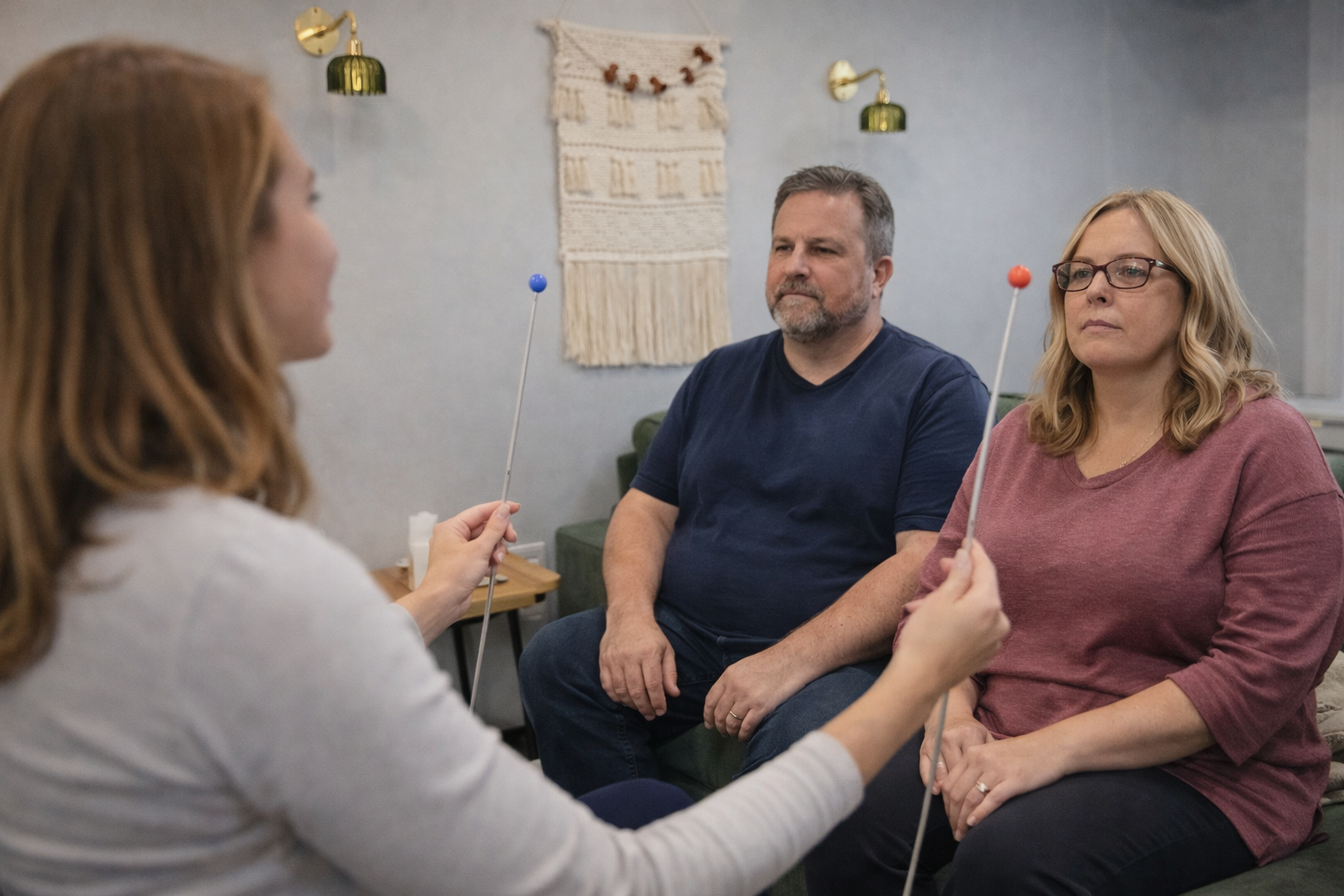
Brainspotting is a body-based, bottom-up therapy that goes way beyond talking. The core idea is simple but kind of mind-blowing: where you look affects how you feel. Your eye position is actually connected to where emotional experiences are stored in your nervous system, and by finding the right spot, we can access and process feelings that words alone can never quite reach.
It was developed as a way to work directly with the nervous system rather than just the thinking brain. Most traditional therapy lives in the neocortex, the part of your brain that analyzes, explains, and tries to rationalize everything. Brainspotting goes deeper, into the subcortical "feeling brain" in your body, your nervous system, your stored emotional memory. That's where trauma, shame, and old wounds actually live. And that's where the real healing happens.
-
You’re not alone.
Many couples come to me after trying therapy that felt like:
Talking in circles
Repeating the same arguments
Leaving sessions feeling worse
That doesn’t mean therapy doesn’t work, it usually means the approach or format wasn’t the right fit.
Weekly sessions can feel too short, momentum gets lost between appointments, and just as things open up, life pulls you back into the same patterns.
If you’re a high-functioning couple, you likely don’t need more surface-level conversations, you need focused, deep work that actually creates change.
That’s why I offer private couples retreats North Carolina, so we can step out of the cycle, go deeper, and create real, lasting shifts in your relationship by the end of the DAY (not month)!
-
Yes, and it’s very intentional.
I use a combination of Emotionally Focused Therapy (EFT), Brainspotting, and Ketamine-Assisted Psychotherapy (KAP) to work with both the mind and the body because real, lasting change doesn’t happen through insight alone.
EFT helps us understand your relationship patterns and shift the negative cycle so you can feel safe, connected, and actually reach each other again.
Brainspotting allows us to access and process deeper emotional wounds that are stored in the body, especially the ones that keep getting triggered no matter how much you “talk it through.”
KAP (when appropriate) helps soften defenses and create powerful emotional breakthroughs, so you can process pain, rebuild trust, and reconnect in a way that feels real, not forced.
This isn’t surface-level communication coaching. This is deep, experiential work that helps you feel different with each other, not just understand each other better.
-
It depends on what you're actually trying to solve.
A couples retreat vacation, like a nice hotel, some quality time, a break from the kids and the grind, can be genuinely restorative. If you're mostly connected but just depleted and overdue for some time together, a vacation might be exactly what you need. Go. Enjoy it. Come back recharged.
But if you're coming home from that vacation and falling right back into the same painful cycle within 48 hours? A vacation didn't fix anything. It just paused it.
Here's the truth: you can't relax your way out of a broken attachment pattern. You can't wine and dine your way past years of accumulated hurt, distance, and disconnection. A beautiful setting doesn't change the dynamic between you, it just changes the backdrop.
That's where intensive therapy comes in. Not instead of a vacation, but in addition to it, or before it, so you actually have the tools to enjoy the time together without it turning into another fight by day three.
A lot of the couples I work with actually plan a trip right after their intensive. And for the first time in years, they actually enjoy it because they're not white-knuckling their way through it hoping nothing blows up.
Do both. But do the work first.
-
Short answer: you probably don't need to know yet. That's what the consultation is for.
But here's a quick breakdown:
EFT (Emotionally Focused Therapy) is where most couples start. It's the foundation of everything I do. We use it to map the negative cycle you're stuck in, the pursuer-withdrawer dynamic, the shutdown, the fight that keeps happening in different costumes, and help you start responding to each other from a different place. It's deeply research-backed and works for most couples.
Brainspotting goes into the body. If there's trauma, personal history, attachment wounds, things that happened in this relationship that left a mark, Brainspotting helps your nervous system process and release what talking alone can't reach. You don't have to tell the whole story. Your body already knows it.
Ketamine-Assisted Psychotherapy (KAP) is for when the mind needs help quieting down. Some people are so locked in their defenses, their anxiety, their shame, that they can't access vulnerability even when they want to. Low-dose ketamine temporarily softens that. It doesn't make decisions for you. It just creates a window. We do the real work inside that window together.
Most couples end up using a blend of all three over time. During our consultation, I'll share my recommendations based on your specific situation.
-
Ketamine Therapy North Carolina, specifically Ketamine-Assisted Psychotherapy (KAP), is a two-day intensive experience that combines the neurological effects of ketamine medicine (very low dose) with the emotional depth of therapy. It's not about numbing out or escaping. It's about finally getting out of your own way. Ketamine quiets the parts of your brain that keep you locked in the same exhausting loops as well as softens the defensiveness, the shutdown, and the spiral, and then opens a window where real emotional movement can actually happen. I use it alongside Emotionally Focused Therapy (EFT) and Brainspotting to help couples (and individuals) access feelings that have felt completely out of reach in regular talk therapy. If you've spent years doing weekly therapy and still feel stuck, this is worth exploring.
-
Then we talk about it. Honestly.
The relationship between a therapist and the people they work with matters enormously. If something isn't clicking, like my style, my approach, the pace, I want to know. You won't hurt my feelings. I'd rather you tell me than quietly disengage.
If we genuinely aren't the right fit, I'll help you find someone who is. There are a lot of great therapists out there. My goal is your relationship getting better, not keeping you on my schedule.
-
Short answer: if it's a real relationship and you're ready to do real work, you're probably in the right place.
Here's the longer version:
Married couples. This is the core of my work- people who built a life together and somewhere along the way lost the thread. The love is still there. The connection isn't. That's exactly what intensives are designed for.
Couples who aren't married. Commitment doesn't require a certificate. If you're in a serious relationship and you're stuck, you're welcome here.
Couples considering divorce or separation. Not every couple I work with is trying to save the marriage in the traditional sense. Some are trying to figure out whether to stay. That's legitimate work too, and it deserves the same honesty and depth.
Individuals who want to work on their relationship patterns. Sometimes one partner isn't ready, isn't available, or the relationship is with yourself. I work with individuals on attachment wounds, relationship anxiety, divorce recovery, and the patterns that keep showing up no matter who you're with.
LGBTQIA+ couples and individuals. My practice is explicitly affirming, not as a checkbox, but as a genuine commitment. You don't have to explain your relationship structure or educate me on your identity. You just get to do the work.
Couples in consensual non-monogamy (CNM). Polyamorous, open, relationship anarchists- whatever your structure, I work within it, not against it. I'm not here to talk you into monogamy.
BIPOC clients. My practice is anti-racist and culturally responsive. That means I'm paying attention to the context your relationship exists in, not just the dynamic between the two of you in the room.
A few things worth naming about who I don't work with:
I don't work with children or teenagers. Adults only — 21 and up.
I don't work with couples where there's active domestic violence or coercive control. That requires a different kind of specialized support, and I'll help you find it.
I don't work well with couples where one person is secretly checked out, keeping major secrets, or treating this as the last box to tick before leaving. The intensive model requires both people to be genuinely willing, not performing willingness.
And I don't work with people who want surface-level advice or a quick script to fix things. That's not what this is.
If you're not sure whether your situation fits, just reach out. The consultation call exists exactly for that. Book your free 30 minutes here and we'll figure it out together.
-
That depends on what you're comparing it to.
Compare it to another year of the same fights, the same distance, the same quiet resentment building at the dinner table while your kids watch? Yes. A thousand times yes.
Compare it to the cost of a divorce, financially, emotionally, and for your children? Not even close.
Here's what I know after 15 years of doing this work in Raleigh and Wake Forest: the couples who invest in real, deep therapy don't just save their marriage. They build something better than what they had before. They stop white-knuckling through the hard moments and actually start enjoying each other again. They show up differently for their kids. They stop dreading coming home.
That's not a small thing. That's your life.
The couples who wait, hoping things will get better on their own, telling themselves they'll try therapy "if it gets really bad, usually come to me when things are already at the breaking point. And while I can still help, it's a lot harder to rebuild after years of accumulated damage than it is to address things while there's still goodness to build on.
Couples therapy in Raleigh ranges widely in quality, format, and cost. What I offer is not the cheapest option. It's also not a slow drip of incremental progress spread over years of weekly sessions. It's concentrated, deep, evidence-based work designed to create real change fast.
Is it worth it? Ask the couples who've done it by reading my glowing google reviews.
-
Sooner than you probably think.
Here's how it works:
Step 1: Book a free consultation. You can grab a spot on my calendar directly from this website, no phone tag, no waitlist to get on a waitlist. Pick a time that works and we talk.
Step 2: We talk for 30 minutes. I'll hear what's been going on, you'll get a feel for how I work, and we'll figure out together whether this is the right fit. If it is, we'll map out a plan by the end of the call.
Step 3: We schedule your first intensive. For new couples, that's a 2-day intensive, 6 hours each day. We'll find dates that work for both of you and get it on the calendar.
That's it. No jumping through hoops.
Here's what I'll say honestly: my schedule does fill up. I keep my practice intentionally small so every client gets my full attention, which means I'm not running a revolving door of back-to-back appointments. When I have availability, I have it. When I don't, I don't.
So if you've been sitting on this, reading the website, watching the videos, thinking "we should probably do something", the best time to reach out is now. Not because of some cheesy urgency tactic. But because the longer disconnection sits, the heavier it gets. And you've already waited long enough.
-
I'm not going to promise you that. And you should be suspicious of any therapist who does.
Here's what I can honestly say: this work gives your relationship the best possible chance. Not a guarantee, but a real, fighting chance. The couples who show up willing and stay with the process almost always find something worth saving.
What I've also seen is couples who come in and discover through the work that they genuinely aren't right for each other. That's not failure. That's clarity. And honest clarity is better than another decade half-present and miserable.
My job isn't to keep you married at all costs. My job is to help you heal and make the most grounded decision you can about your future, together or apart.
What I know for sure: if you're still here, still reading this, still willing to reach out, that means something. The couples who don't make it aren't usually the ones who tried too hard. They're the ones who waited too long.
Don't wait.
-
Yes! Couples travel here from all over.
Depending on our mutual availability, some couples prefer to schedule 2–3 day intensives back-to-back in one trip for maximum impact. Other couples prefer to fly in monthly for just a single intensive day and have a mini couples trip. It’s whatever works best for your situation.
We’ll work together to find a schedule that fits your travel needs while still keeping the consistency needed for real progress.
-
Not all couples retreats are the same, and the differences matter a lot when your relationship is on the line.
Here's what I'd look for.
Is it actually therapy? A lot of "couples retreats" are really just workshops- group settings where you sit in a room with other couples doing exercises. That can be valuable, but it's not the same as working one on one with a trained therapist who is fully focused on your specific dynamic, your specific wounds, and your specific cycle.
Who is leading it and what are their credentials? Look for someone with specialized training in evidence-based couples therapy, not just a life coach or a relationship expert with a podcast. Your marriage deserves a clinician who knows what they're doing.
Is it private? The most powerful work happens when it's just the two of you and your therapist. No audience. No performing. No holding back because strangers are in the room.
What happens after? A good couples retreat doesn't just send you home with a warm feeling and a notebook. There should be a clear integration plan, real tools, real next steps, and ideally ongoing support to help you sustain what you built.
Does the format match the urgency? If things are serious, a one-afternoon workshop isn't going to cut it. Look for something with enough time to actually go deep, at least a full day, ideally two.
The right couples retreat near you isn't necessarily the closest one. It's the one built to create real, lasting change, not just a good weekend.
-
My office is located in downtown Wake Forest, North Carolina.
It’s a private, comfortable space designed specifically for deep, focused work with couples and individuals.
-
No. And honestly, if your therapist is taking sides, that's a problem.
My job isn't to figure out who's right and who's wrong. It's not to validate one partner's version of events at the expense of the other's. You both come in with real pain, real fears, and real reasons for why you do what you do. Both of those truths matter, even when they look completely different from each other.
What I will do is be direct with both of you. That means I'll point out when a pattern is doing damage, even if it's uncomfortable to hear. I'll name what I see without sugarcoating it. I'll hold both of you accountable, not to being perfect, but to showing up honestly and doing the work.
That's not the same as taking sides. That's actually the opposite. Taking sides would mean one of you wins and one of you loses. What I'm going for is something completely different: both of you finally feeling safe enough to be real with each other, and finding your way back to the same team.
This is not a space where one of you gets to be the identified "problem." In my experience, there's almost never one villain in a struggling relationship. There are two people caught in a painful cycle, both doing their best with what they've got, and both desperately needing someone to help them see what's actually happening underneath the fighting, the silence, or the distance.
That's what I'm here for.
-
Yes. My office is located in Wake Forest, NC and I work with couples throughout the Raleigh/Durham/Cary/Chapel Hill/ Wake Forest area and beyond.
In-person intensives happen at my cozy Wake Forest office- it's private, comfortable, and set up specifically for deep work. Not a sterile clinical space. A place where people actually feel safe enough to be real.
-
Yes! I offer solo intensives as well.
-
In rare cases, yes. But it's not my preference, and here's why.
The work I do is deep, body-based, and intensely relational. Brainspotting, Ketamine-Assisted Psychotherapy, and EFT intensives all require you to be physically present in the room. You can't do a ketamine session over Zoom. You can't track nervous system responses through a screen. And frankly, the kind of breakthroughs I see happen in intensives just don't translate the same way online.
The couples and individuals who get the most out of working with me are the ones who show up, in person, fully committed, ready to do the work.
That said, I understand life is complicated. There may be occasional situations where a virtual session makes sense, a quick integration check-in, a scheduling gap, or something that comes up between intensives. I handle those on a case-by-case basis.
But if you're serious about real change? Come in. The commute is worth it. People fly and drive from all over the country to do this work, and they'll tell you it was worth every mile.
-
Yes, I wish more couples came to me before things got hard instead of after.
Most people wait until they're drowning before they ask for help. By then, there's years of hurt, resentment, and entrenched patterns to untangle. Pre marriage counseling is the opposite of that. It's proactive. It's smart. It's saying "we love each other and we want to build this right from the start."
In a premarital intensive, we dig into the stuff that actually predicts whether a relationship thrives or falls apart — your attachment styles, your conflict patterns, how you handle stress, what you each need to feel safe and loved, and the family wounds you're each bringing to the table whether you realize it or not.
Because here's the truth: you don't just marry a person. You marry their nervous system, their childhood, their unspoken fears, and their deepest needs. Knowing that going in? That's a game changer.
If you're engaged or seriously considering marriage and want to start on solid ground rather than spend the next decade figuring out what went wrong, this is for you.
-
Depends on the therapy. And on you.
Traditional weekly couples therapy? For a lot of couples, it's frustratingly slow. You go in, rehash the same fight, leave feeling slightly better, and repeat the cycle for years. I've had couples come to me who spent three, five, even ten years in weekly therapy and still felt stuck. That's not a knock on therapy, it's a knock on the format.
The intensive model I use is different. Instead of spreading healing out over months of 50-minute sessions, we go deep in concentrated blocks of time. We get to the root of what's actually driving your conflict, not just the surface stuff, and we don't stop until something real shifts.
Is it worth it? Here's what I know:
The couples who do this work stop fighting about the dishes and start actually hearing each other. They go from feeling like exhausted roommates to remembering why they chose each other in the first place. They stop passing their patterns down to their kids. They build something that actually lasts.
That's worth it.
What's not worth it is waiting another year hoping things get better on their own. They won't. But you already know that, or you wouldn't be here.
-
Emotionally focused therapy, or EFT, works because it gets underneath the fight. Not the surface argument about who forgot to call the plumber, but what's actually happening beneath it. The fear. The longing. The "I need to know I matter to you" that comes out as anger or silence instead.
Here's the thing most couples don't realize: you're not fighting about what you think you're fighting about. You're caught in a cycle, a predictable, painful dance where one person pursues and the other withdraws, or both come out swinging. And the more you do it, the more disconnected and hopeless it feels.
EFT slows all of that down. We map your cycle together so you can finally see it clearly, not as "my partner is the problem" but as "this is the pattern we've both been trapped in." And then, slowly and carefully, we help you step out of it.
What that looks like in practice:
Learning to recognize your triggers before they hijack the conversation
Getting underneath the reactive emotions to what's really going on
Finding words for the vulnerable stuff that usually comes out as criticism or shutdown
Creating new moments of genuine connection — reaching for each other instead of away
EFT is the most researched couples therapy approach in the world. It works. Not because it teaches you communication tricks, but because it changes the emotional foundation your relationship is built on.
-
EFT is best for couples who still love each other but can't seem to stop hurting each other.
It's particularly powerful if you:
Keep having the same fight over and over and can't figure out why
Feel more like roommates than partners
Have one person who pursues and one who shuts down, and both are exhausted by it
Carry old wounds from childhood or past relationships that keep showing up in your marriage
Have tried other approaches and still feel stuck
Want to stop the cycle before it does permanent damage to your kids
EFT is not a good fit if one or both partners have already emotionally checked out and are just going through the motions. It requires both people to still have some fight left, some part of them that still wants this to work.
It's also not magic. It asks you to be vulnerable, to slow down, and to say the scary thing instead of the defensive thing. That takes courage. But for couples who are willing to go there? EFT is one of the most powerful things I've ever seen.
If you're not sure whether EFT is the right fit for where you are right now, that's exactly what our free consult call is for.
-
What should I look for in the best marriage counselors near me?
Not all couples therapists are created equal, and this is one area where doing your homework actually matters.
Here's what I'd look for:
Specialized training in couples therapy. General therapists who "also see couples" are not the same as someone who has dedicated their entire practice to relationship work. Look for training in evidence-based approaches like Emotionally Focused Therapy (EFT), Gottman Method, or similar. Couples therapy is a specialty. Treat it like one.
A format that matches the urgency of what you're dealing with. If your relationship is in real pain, weekly 50-minute sessions may not cut it. Look for someone who offers intensives- concentrated, deep work that actually moves the needle instead of dragging things out for years.
Someone who keeps it real. You don't need a therapist who nods sympathetically and hands you a worksheet. You need someone who will tell you the truth, challenge your patterns, and not let you off the hook when you're the one making things worse.
Lived experience. Credentials matter. But so does a therapist who has actually navigated hard stuff in their own life and relationships. That's not something you can fake in the room.
And honestly? Trust your gut. The best marriage counselor near you is the one you actually feel safe being vulnerable with. If something feels off in the consult call, keep looking.
-
Good question because the experience can vary wildly depending on who you work with.
At a baseline, you should expect someone who is licensed, trained, and actually knows what they're doing. In North Carolina that means an LCSW, LPC, LMFT, or similar credential. That's the floor, not the ceiling.
Beyond that, here's what you should expect from a good therapist in Raleigh NC:
A real human being in the room, not someone hiding behind a clipboard and clinical distance. Someone who challenges you, not just validates you. A therapist who has done their own work and isn't scared of yours. Someone who respects your time and doesn't drag out the process longer than it needs to be.
What you should not have to settle for: feeling like just another client on a packed caseload, surface-level conversations that never go anywhere, or walking out of sessions feeling exactly the same as when you walked in.
Raleigh has a lot of therapists. What's harder to find is someone who specializes deeply in what you actually nee, whether that's couples work, trauma, or something more intensive than weekly sessions can offer.
If you're looking for a therapist in Raleigh NC who works exclusively with couples and individuals ready to do deep, fast, real work, that's exactly what I do. And the free consult call is the best place to find out if we're a good fit.
-
Yes.
Regular couples therapy assumes both partners are committed to staying together and working on the relationship. Divorce couples therapy, sometimes called discernment counseling, is for couples who aren't sure yet. Where one or both partners are seriously considering leaving and need help figuring out whether to stay and fight for the marriage or move forward separately.
It's not about saving the relationship at all costs. It's about making a clear, conscious decision, together, about what comes next. Without the fog of pain, reactivity, and fear clouding everything.
Here's what I want you to know: coming to therapy when divorce is on the table is not a sign that it's over. It's actually one of the bravest things a couple can do. It means you're not just blowing up your lives without really looking at what's happening and why.
Some couples come in thinking they're done and leave with a real reason to stay. Others come in hoping to save things and realize, with clarity and compassion, that separating is the healthiest path forward. Either way, they leave with more understanding, less resentment, and a better shot at whatever comes next.
If divorce is on the table but you're not 100% sure, don't make that decision in the middle of the worst fight of your marriage. Come talk first.
-
Both are evidence-based approaches to couples therapy, and both can be effective. But they work differently, and the distinction matters.
The Gottman Method is largely skills-based. It focuses on building friendship, managing conflict constructively, and creating shared meaning. It gives couples concrete tools on how to have a difficult conversation, how to repair after a fight, how to recognize the warning signs that a relationship is in trouble. It's structured, research-driven, and very practical.
EFT, Emotionally Focused Therapy, goes deeper into the emotional and attachment layer underneath the conflict. Instead of teaching you how to fight better, it gets at why you keep fighting in the first place. It works with the primal fear and longing that drives your reactions, the "I need to know I'm in your heart" that comes out as anger or shutdown instead.
In simple terms: Gottman gives you tools. EFT changes the emotional foundation your relationship is built on.
I trained extensively in EFT because I believe lasting change happens at the emotional level, not just the behavioral one. You can learn all the communication skills in the world, but if you still feel fundamentally unsafe or unseen with your partner, the tools won't stick.
That said, these approaches aren't mutually exclusive. Good couples therapy often draws from both.
-
Honestly, the overwhelming number of options doesn't make it easier. Everyone has a website that says the right things. So how do you actually know?
Here's what I'd pay attention to.
Do they specialize in what you need? A therapist who sees individuals, couples, kids, eating disorders, and addiction is spreading themselves thin. Look for someone who has gone deep in one area, not someone who does a little of everything.
Do they sound like a real person? If their website reads like a brochure with stock photos and generic language about "creating a safe space," keep scrolling. You want someone whose voice, values, and approach actually come through.
What do their clients say? Reviews and testimonials tell you a lot. Not just "she's great" but how she helped and what changed.
How do you feel on the consult call? This is the big one. You should feel heard, not sold to. Challenged, not patronized. Like this person actually gets what you're going through, not just nodding along.
Are they still growing? The best therapists invest heavily in their own training, supervision, and personal development. If someone hasn't done a training in years, that's worth noticing.
Trust your gut. The right therapist near you is the one you feel safe enough to fall apart in front of. That's not something you can fake, and you'll know it when you feel it.
-
Great question because the name confusion is real and I hear this a lot.
There are actually two completely different therapies that share the same acronym, and they have nothing to do with each other.
EFT Emotional Freedom Technique is a somatic tapping practice. You tap on specific acupressure points on the body while focusing on a problem or emotion. It's rooted in energy psychology and is often used for stress, anxiety, phobias, and emotional regulation. It's a useful tool, but it's not couples therapy.
EFT Couples Therapy Emotionally Focused Therapy is something entirely different. It was developed by Dr. Sue Johnson and is one of the most researched and validated approaches to couples therapy in the world. It works with attachment theory and focuses on the emotional bond between partners, helping couples identify the painful cycles they're stuck in, understand the deeper fears and longings driving their reactions, and rebuild a secure, lasting connection.
This is what I do.
-
If you've been struggling for a while and feel like you're running out of time, patience, or hope, yes, probably.
Intensive marriage counselling is designed for couples who are done with slow. Done with rehashing the same fight every week in a 50-minute session that barely scratches the surface. Done waiting months to feel a difference while the distance between them keeps growing.
It's the right fit if:
You've tried weekly therapy and it hasn't moved the needle
Your relationship is in real pain and you can't afford to wait it out
You're both still willing, even if it's just barely, to fight for this
You want deep, concentrated work that creates actual change in days, not years
Life is busy and you need something that works around your schedule, not the other way around
It's not the right fit if one or both of you have already emotionally checked out and are just going through the motions. Intensive work requires something left in the tank — some part of both of you that still wants this.
The couples I work with aren't weak. They're exhausted. There's a difference. They love each other but can't figure out how to stop hurting each other. That's exactly who intensive marriage counselling was made for.
Still on the fence? Book the free consult call. Thirty minutes and you'll know.
-
The couples who find their way to me usually aren't dealing with just one thing. It's almost always a tangle of several things that have built up over years.
That said, the most common marriage counseling issues I work with include:
Pursuer-withdrawer cycles. One partner pushing for connection, the other shutting down. Both exhausted. Neither feeling heard.
Emotional disconnection. You love each other but feel more like roommates than partners. The intimacy — emotional and physical — has quietly disappeared.
Repetitive conflict. The same fight on a loop, different topic every time, same outcome. Nothing ever really resolves.
Infidelity and betrayal. Affairs, emotional or physical, and the devastation of broken trust.
Parenting stress. Two people who used to be a team now just co-managing a household and barely seeing each other as people.
Old wounds showing up in the marriage. Childhood trauma, attachment injuries, and family patterns that neither of you asked for but both of you brought to the table.
Communication breakdown. Not just "we don't communicate well", but the deeper issue of not feeling safe enough to say what's really true.
Depression, anxiety, or trauma affecting the relationship. When one or both partners are struggling individually and it's bleeding into everything between them.
If you're not sure whether what you're dealing with fits, it probably does. And the free consult call is the best place to find out.
-
Book a free 30-minute consultation here. We will talk about what's been happening, what you're hoping for, and whether this is the right fit. At the end of the call, if we both feel good about it, we'll map out the plan.
You don't need to have everything figured out before you call. You just need to be ready to have an honest conversation. That's enough.
Your Roadmap to Healing
Step 1: Schedule Your Free Consultation
It all begins with a real conversation. During this call, I’ll listen to your story, answer your questions, and help you decide whether a private intensive retreat is the right fit for your relationship. Afterward, we’ll decide which custom experience best fits your goals:
EFT Couples Intensive — Rebuild Emotional Safety and Lasting Connection
Ketamine Couples Intensive — Quieten the mind, soften defenses, and unlock insight
Brainspotting Couples Intensive — Release Emotional Blocks/Trauma and Rewire Old Patterns
Solo Ketamine or Brainspotting Intensive — Deep Work for One, Transform Change for Two (with a custom blend of modalities)
Step 2: Book Your Couples Retreat
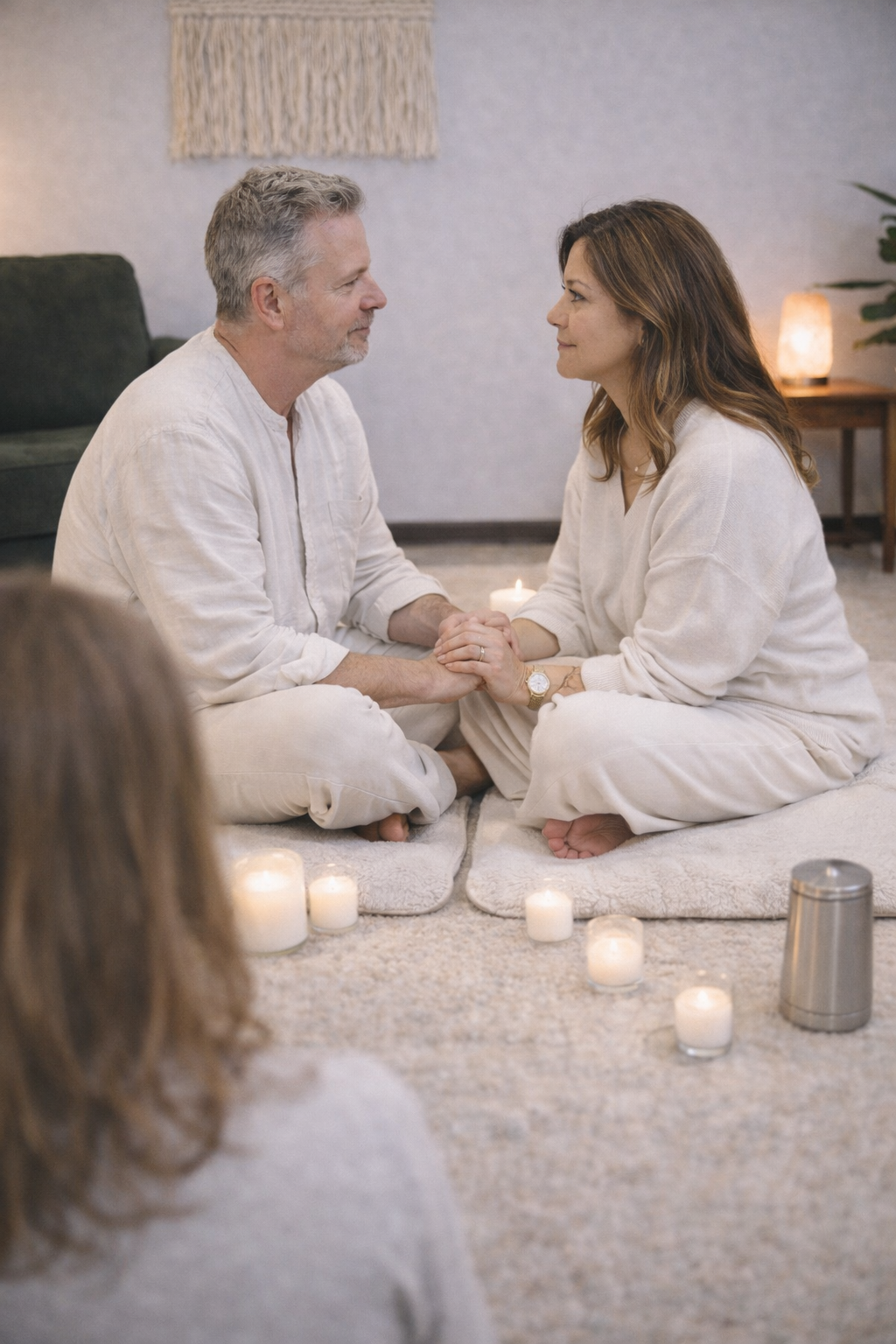
For new couples, we start with a 2-day retreat (6 hours each day) in my cozy Wake Forest office. This immersive experience allows us to slow down and do deep, meaningful work without the “start and stop” of weekly therapy. Together, we’ll uncover your negative cycle, reconnect through new moments of safety and vulnerability, and begin transforming your bond.
If ketamine therapy is part of your plan, we’ll also discuss how to integrate it thoughtfully and safely with my collaborating medical prescriber.
Step 3: Transform With Ongoing Retreats & Deeper Healing
After your first retreat, we’ll continue your journey through a series of 1-day (6-hour) follow-up intensives to deepen connection and solidify your new patterns.
The couples who experience the most meaningful progress commit to a roughly monthly intensive schedule for approximately 12 months. This creates safety, continuity, and measurable transformation. . While that may sound like a big commitment, it’s far more efficient, and life-changing, than years of traditional weekly therapy.
WHAT OTHERS ARE SAYING ON GOOGLE
“What truly sets Irina apart is her genuine passion for counseling. It is evident that she isn't driven by financial gain but rather by a sincere desire to help couples find happiness and harmony. Irina consistently demonstrated that she had our best interests at heart, and she never hesitated to let us know when she believed we were ready to graduate from therapy or when she felt we needed more work. This level of transparency and honesty allowed us to trust her deeply.”
Videos To Help Your Marriage
Get On Track

What to expect during your first consultation call with a therapist?
What to expect during your first couples therapy intensive (which means 6 hours in 1 day) session?
WHAT OTHERS ARE SAYING ON GOOGLE
Irina has a confident, gentle energy which makes you feel at ease and open. She is kind, patient, and knowledgeable. She truly understands relationship dynamics to support people where they are without judgement.
Learn About Different Types of Custom Retreats
EFT Intensive — Rebuild Emotional Safety and Lasting Connection
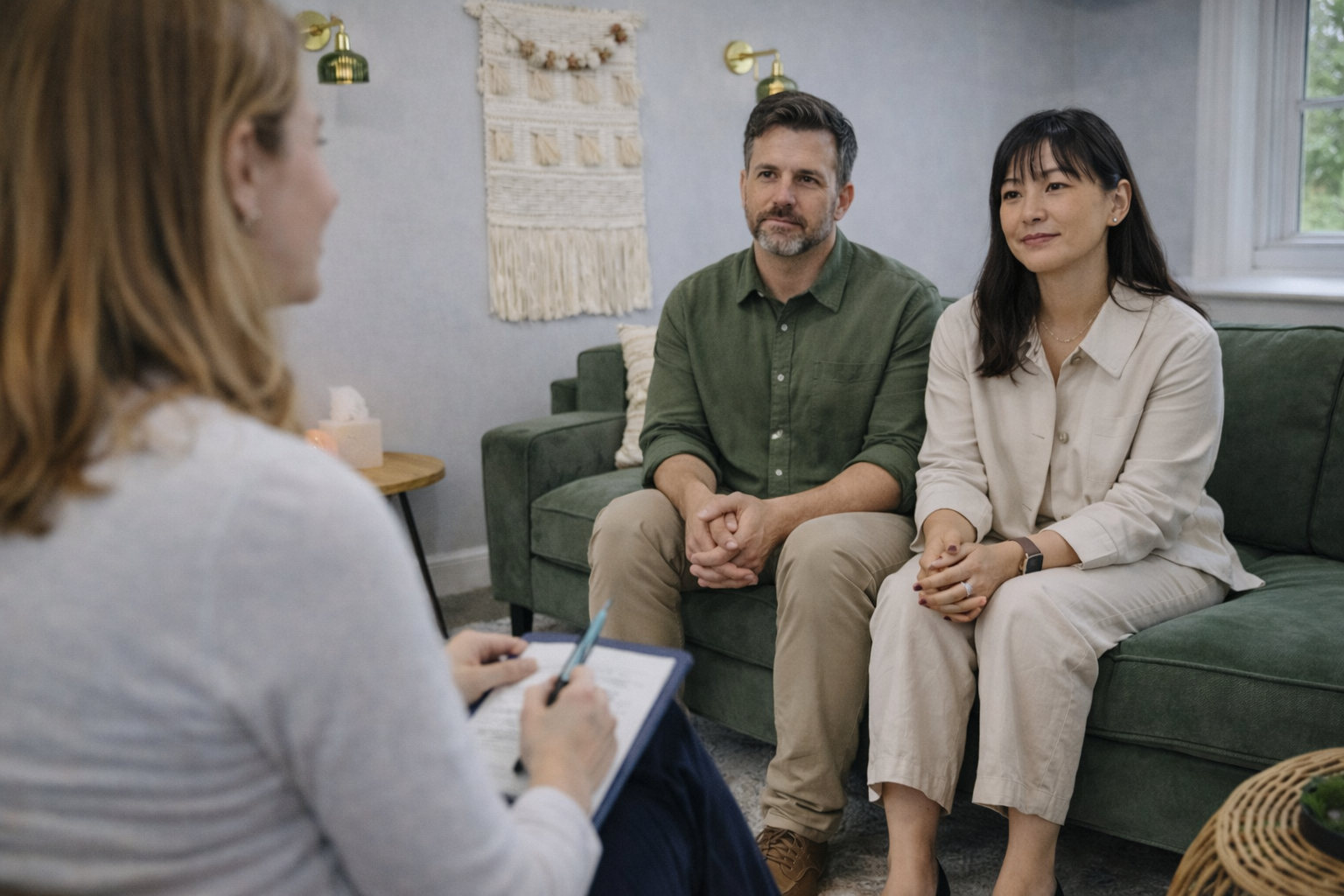
This retreat is rooted in Emotionally Focused Couples Therapy (EFT)—the most research-backed method for helping couples heal emotional distance and rebuild trust.
We’ll slow down the reactive moments, uncover your negative cycle, and help you both see the fears and longings underneath your conflicts. As you begin turning toward each other again, you’ll create new experiences of emotional safety—the foundation for deeper intimacy and passion.
You’ll leave with a clearer emotional map, tools to stay connected even in hard moments, and a sense that your relationship can feel alive again.
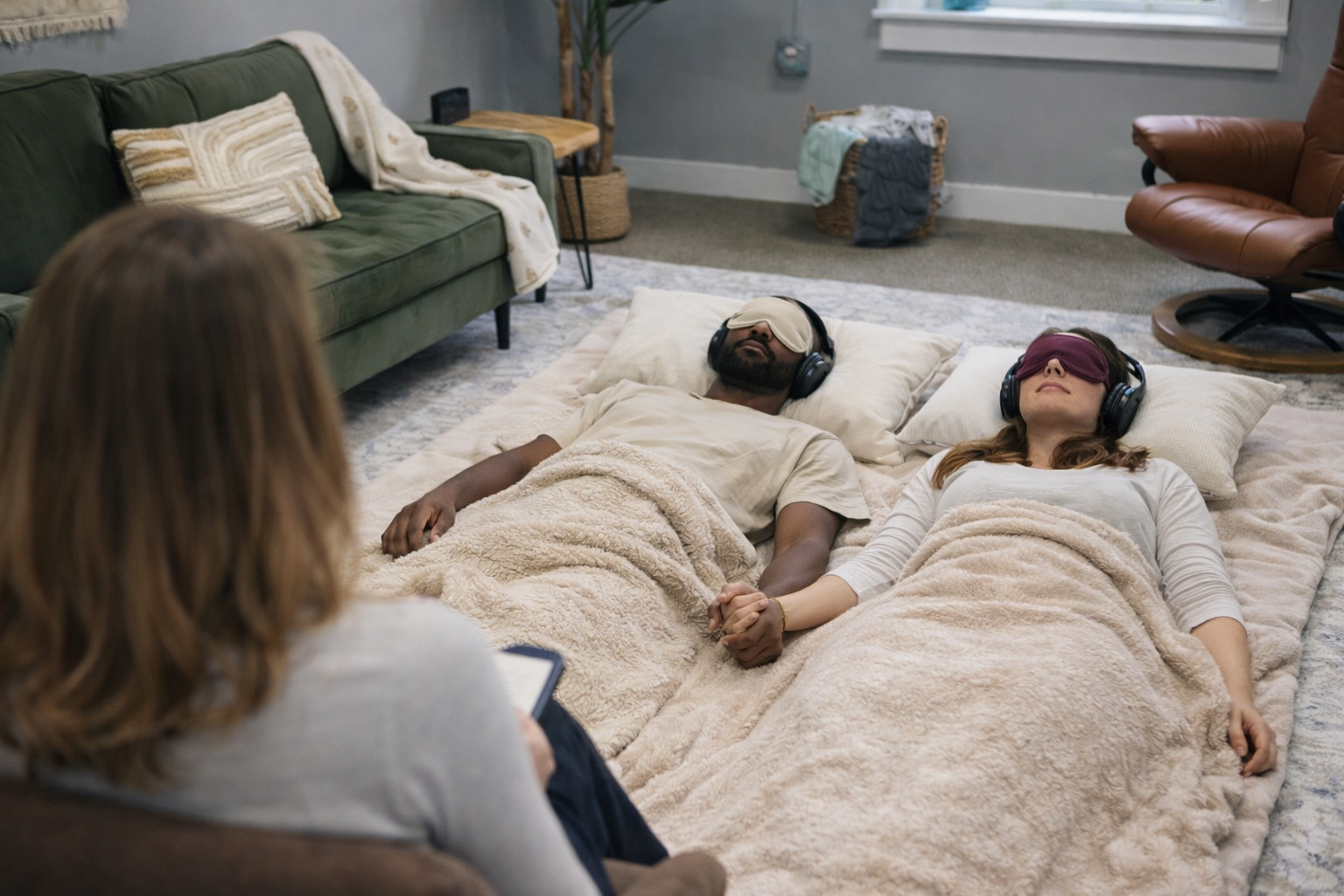
Ketamine-Assisted Psychotherapy (KAP) Intensive — Quieten the Mind, Soften Defenses, and Unlock Insight
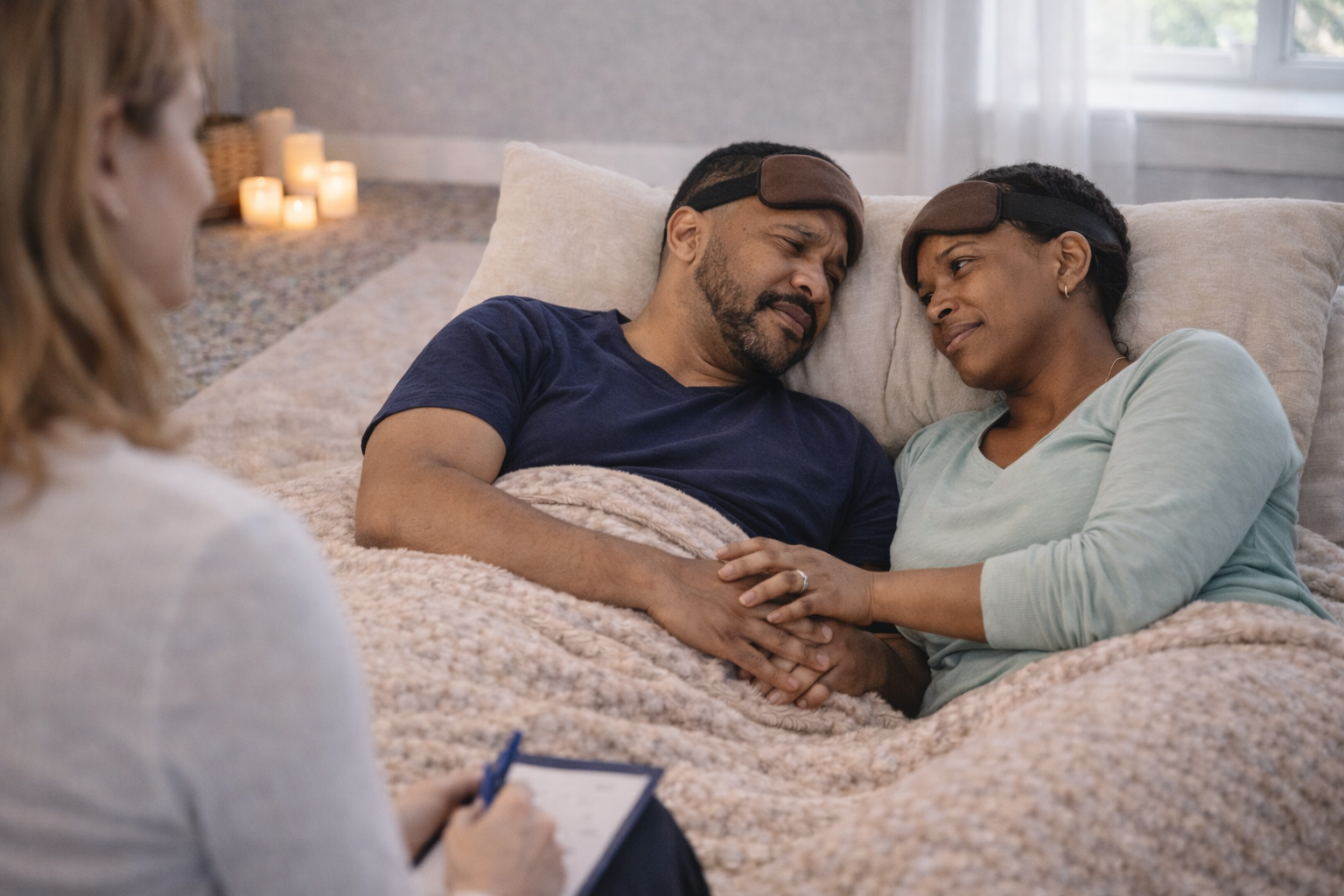
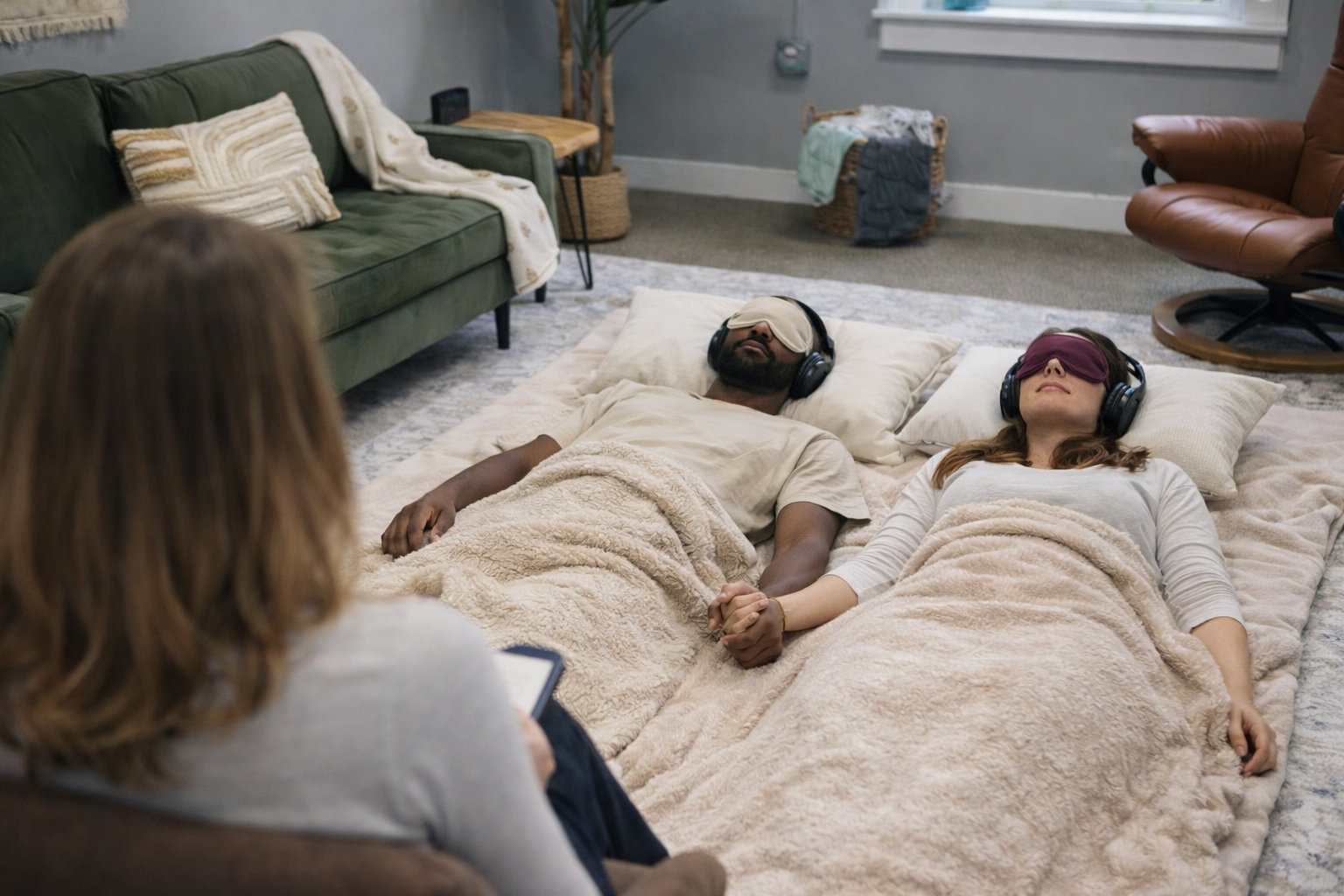
When words aren’t enough, KAP helps you access what’s been out of reach. With eye shades and headphones on, low-dose ketamine gently floods the brain with glutamate, a powerful neurotransmitter that promotes neuroplasticity and accelerates healing by decreasing anxiety, depression, pain, and immflamation.
This temporary quieting of the brain’s default mode network allows you to step outside habitual thought loops, defenses, and shame, opening space for new perspectives and emotional breakthroughs.
As you move through this expanded, softened state, I usually weave in Emotionally Focused Therapy integration, helping you put words and meaning to what arises. The result? Profound clarity, compassion, and connection, both within yourself and with your partner. KAP goes beyond talk therapy; it speaks the language of the body, heart, and nervous system.
Brainspotting Intensive — Release Emotional Blocks and Rewire Old Patterns
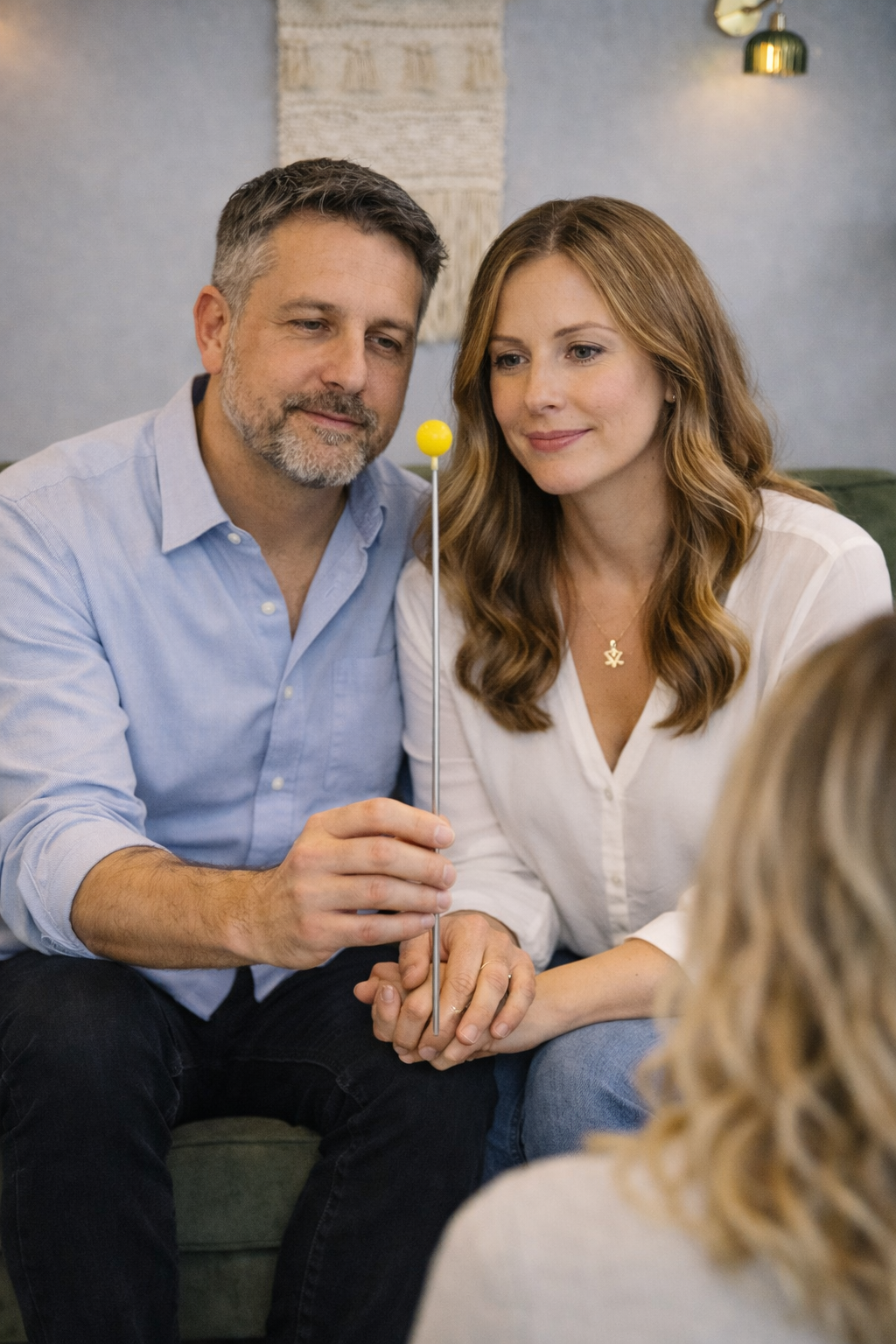
Brainspotting is a powerful, cutting-edge, body-based therapy for people who’ve found that traditional talk therapy doesn’t always get to the root of the pain. Instead of analyzing or rehashing what happened, Brainspotting allows your body to process and release the pain directly, where it’s been held all along.
By identifying precise eye positions (“brainspots”) connected to emotional activation, we access the subcortical regions of the brain—the areas that store trauma, attachment wounds, and automatic stress responses. These are the places that talking can’t reach, but your nervous system knows how to heal once given the chance.
Through gentle guidance, attunement, and mindful presence, Brainspotting invites your body to complete what was once interrupted, to release frozen survival energy and integrate the experience fully. As this happens, you begin to feel more regulated, grounded, and present, often with a sense of quiet relief or emotional spaciousness you didn’t realize was possible.
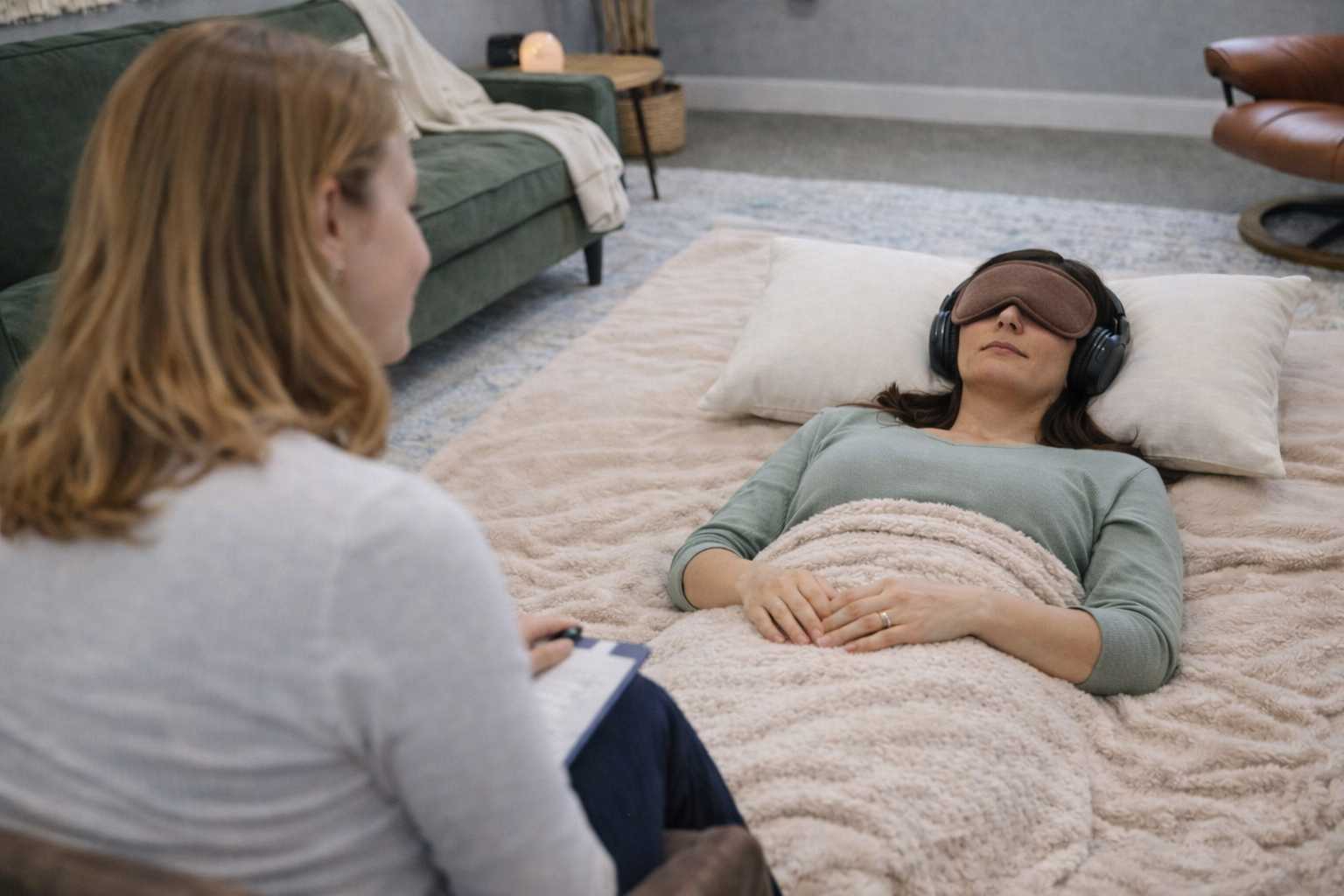
Solo Healing Intensive — Deep Work for One, Transform Change for Two
Sometimes one partner feels the pull to go first—to explore, to heal, to do the inner work that the relationship has been calling for. And that’s not just okay—it’s powerful. Real change often begins when one person chooses to break the cycle and turn inward with courage and curiosity.
This retreat is created for individuals who want to heal personal wounds, regulate their nervous system, and bring new clarity and emotional depth into their relationship—whether your partner is ready to join you yet or not.
Your experience will be custom-blended from the most effective healing modalities.
We’ll move at the pace your body, heart, and nervous system can safely handle—creating a space where you can gently release old stories, reconnect with your authentic self, and rediscover your inner strength and calm. Because when one partner heals, the relationship begins to shift.
If you are unsure what retreat is best for your unique needs, don’t stress. Not knowing is actually very common and normal. After discussing everything during the phone consult, I will share all my recommendations with you, so you can understand andecide.
Sign up for my newsletter and get the inside scoop on building a connected marriage + BONUS get a free copy of my book!
Join the newsletter below to get relationship tools and announcements of upcoming retreats and intensives sent straight to your inbox.
You Belong Here
My services are explicitly LGBTQIA+ and BIPOC (Black, Indigenous, and People of Color) affirming, anti-racist, trauma-informed, HAES aligned (Health At Every Size), culturally responsive, and supportive of individuals in the CNM (Consensual Non Monogamy) communities.
Discover how one couple reclaimed their relationship and built something that truly works for them. (I've protected their faces in the video to honor their privacy.)
WHAT OTHERS ARE SAYING ON GOOGLE
“What isn’t there to say about Irina! She is the most balanced, knowledgeable & sincere therapist I have met to date. She listens, and I mean really listens, she is compassionate but sure to offer you the professional feedback you need from a perspective that will allow growth, peace and healing in your own situation. She has much experience and was highly recommended and I see why. In a world where many of us just need a healthy resource she was beyond my expectations. I felt she really wanted me to improve on all levels and meeting her has enriched my life is many ways.”

ICEEFT Certified Emotionally Focused Couples Therapist (4 year long post graduate certification training and ongoing individual and group monthly consultation)